As an Amazigh person (I am also mixed ethnically) , Yennayer is more than a date on a calendar for me. It is a tradition passed down through generations, a moment when history, land, and family come together.
Every year in mid-January, we celebrate Yennayer, the Amazigh New Year. According to my ancestors, this year is 2976. This way of counting time reminds us that our history did not begin recently — it stretches back thousands of years.
What Yennayer Means to Us
Yennayer marks the beginning of the agricultural year. Long before modern calendars, our ancestors measured time through the land: rainfall, harvests, and seasons. The earth was our clock.
Our calendar begins in 950 BCE, a year remembered in Amazigh oral history as the rise of King Shoshenq I, an Amazigh ruler who became Pharaoh of Egypt. For us, this moment symbolizes Amazigh presence and strength in ancient history. That is why, today, we say we are in the year 2976.
Yennayer is not just about the past. It is about continuity — keeping alive the values, stories, and wisdom that our elders entrusted to us.
A Celebration of Renewal and Respect
In my family, Yennayer is a time of renewal. We believe the way we welcome the year influences what it will bring. That is why we try to begin it with:
– Clean hearts and clean homes
– Respect for one another
– Gratitude for what the land has given us
It is also a night of storytelling, where elders remind us who we are and where we come from.
Traditional Yennayer Foods
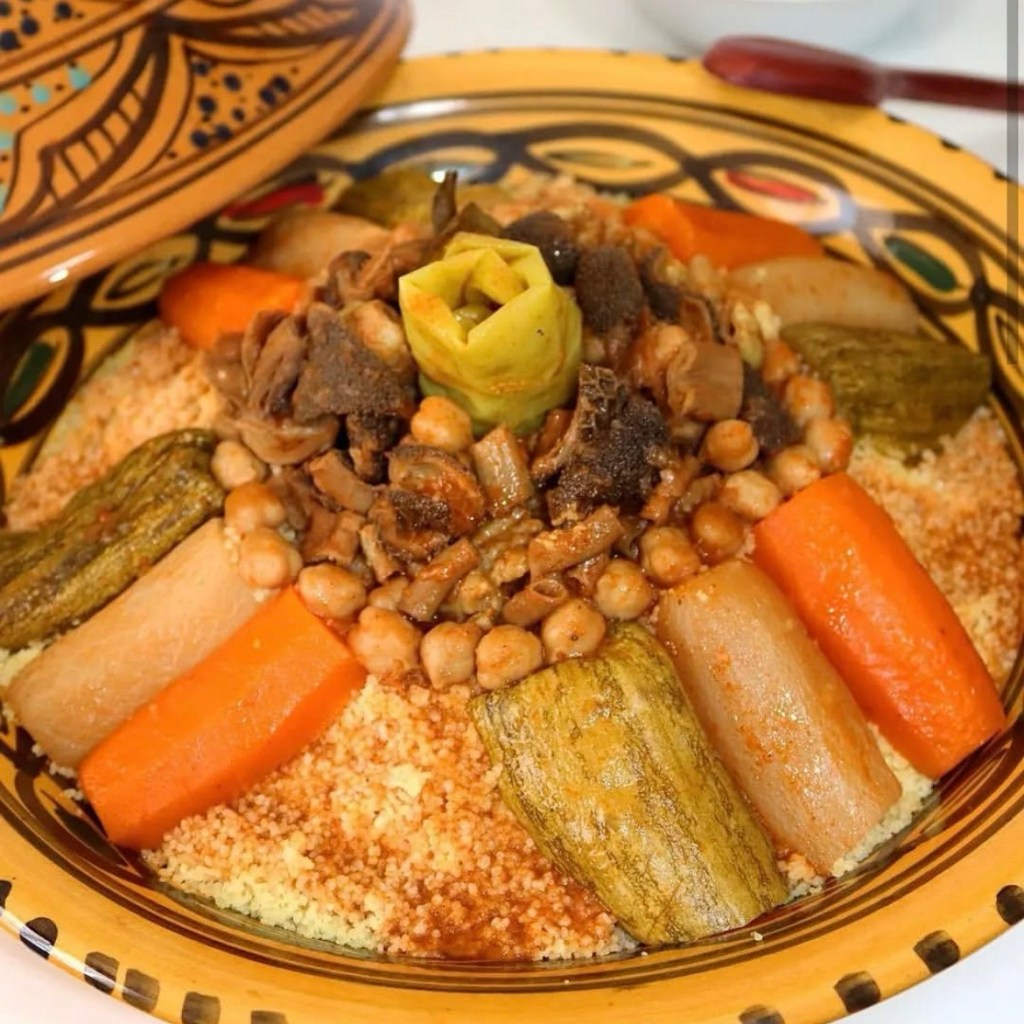
Food is at the heart of our celebration because it represents abundance and blessing. We traditionally prepare:
– Couscous with several vegetables, symbolizing prosperity and balance
– Chicken or lamb, often served because it represents fertility and continuity
– Dried fruits and nuts like dates, figs, almonds, and walnuts
– Hard-boiled eggs, a symbol of new life
– Honey and butter, wishing sweetness for the year ahead
In some homes, including ours, a date pit or almond is hidden in the couscous. Whoever finds it is said to have good luck during the year. 😉
Customs Passed Down Through Generations
Before Yennayer, we clean our homes to welcome the new year with freshness and positivity. Children often wear new or traditional clothes and receive small gifts or sweets.
Most importantly, Yennayer brings the family together. We eat from the same dish, share laughter, and listen to the elders. These moments remind us that our culture survives not only in books, but in living memories.
Why Yennayer Still Matters
Today, Yennayer has become a symbol of Amazigh identity and pride. Celebrating it openly is a way of honoring our ancestors and ensuring that future generations know their roots.
When I say ⴰⵙⴳⴳⴰⵙ ⴰⵎⴳⴳⴰⵣ (Asggas Amggaz), I am not just saying “Happy New Year.” I am saying: we are still here, honoring our roots, respecting nature, and celebrating together are values that never grow old.
Algerian women with traditional clothing
References & Further Reading
Encyclopaedia Britannica — Berber (Amazigh) People
UNESCO — Amazigh cultural heritage and oral traditions
Brett, M. & Fentress, E. (1996). The Berbers. Blackwell Publishing.
Camps, G. (1987). Les Berbères: Mémoire et Identité. Éditions Errance.
Chaker, S. (1998). Berbères aujourd’hui. L’Harmattan.
Academic research and Amazigh oral tradition regarding Shoshenq I (950 BCE)
I am a naturally curious woman who enjoys researching a variety of topics, including history, sports, culture, and more. I also love cooking and caring for my two cheerful and inquisitive children. My love for coffee, reading, and writing allows me to indulge in moments of tranquility. As an ambivert, I appreciate good company but also seek refuge in solitude, finding solace away from the bustling crowd. Currently, I am immersed in the creative process of crafting a children's book, infusing it with playful imagination and heartfelt lessons.
View all posts by Carolina Mom





 Carolina Mom