

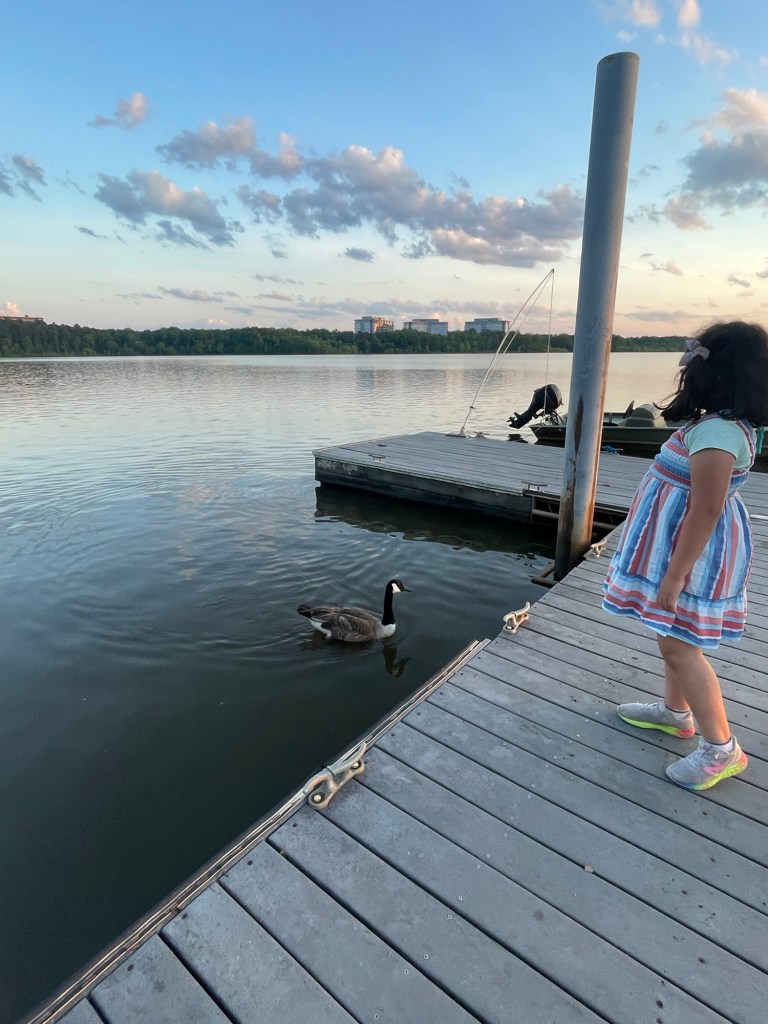
I walk almost every day for 30 minutes, and sometimes even longer. It feels great, and I often feel like I’ve lost a few pounds, even if the scale doesn’t reflect that. 🙄😂
Recently, I started taking my 7-year-old daughter with me for our walks. Just yesterday, my 10-year-old son joined us for our routine. To my surprise, we had a wonderful conversation during our walk. The kids talked about their school day, what they learned, and the subjects they feel they are struggling with and need help on. They shared stories about their friends, their teachers, and their dreams. I realized that walking with my kids is very rewarding, well at least it was yesterday.
If you are a parent, you will understand what I mean. Every time I ask them about their day, whether it’s during school pick-up or at dinner, the answer is always, “fine.” No matter how hard I try to get more information, it’s always the same. 🤷🏻♀️
That reminds me of a former colleague who enjoyed taking his meetings outdoors. Whenever someone visited him, he would always take them for a walk. I found it funny, but he explained that it was rewarding.
Now I understand why. Walking and talking can lead to a wider range of topics compared to sitting and facing each other. I believe our brains function better when we walk.
And there’s research to support this. The practice of walking while engaging in conversation has been explored across several domains, including psychology, creativity, therapy, education, and workplace dynamics. Here’s how research supports the idea that walking and talking can be particularly beneficial:
- Cognitive and Creative Benefits:
A notable study conducted at Stanford University (Oppezzo & Schwartz, 2014) discovered that walking enhances creative thinking. Participants who walked, whether indoors or outdoors, generated significantly more creative ideas than those who remained seated.
A summary from their abstract:
Four experiments demonstrate that walking boosts creative ideation in real time and shortly after. In Experiment 1, while seated and then when walking on a treadmill, adults completed Guilford’s alternate uses (GAU) test of creative divergent thinking and the compound remote associates (CRA) test of convergent thinking. Walking increased 81% of participants’ creativity on the GAU, but only increased 23% of participants’ scores for the CRA. In Experiment 2, participants completed the GAU when seated and then walking, when walking and then seated, or when seated twice. Again, walking led to higher GAU scores. Moreover, when seated after walking, participants exhibited a residual creative boost. Experiment 3 generalized the prior effects to outdoor walking. Experiment 4 tested the effect of walking on creative analogy generation. Participants sat inside, walked on a treadmill inside, walked outside, or were rolled outside in a wheelchair. Walking outside produced the most novel and highest quality analogies. The effects of outdoor stimulation and walking were separable. Walking opens up the free flow of ideas, and it is a simple and robust solution to the goals of increasing creativity and increasing physical activity.
(PsycINFO Database Record (c) 2014 APA, all rights reserved).
- Mental Health and Communication:
Therapists have found that clients often feel more relaxed and open when walking, possibly because engaging in side-by-side movement during conversations naturally diminishes the intensity of direct eye contact, fostering a more comfortable and open environment. This positioning allows individuals to communicate more freely, as the shared focus on a common direction can reduce the pressure often associated with sustained eye contact, ultimately encouraging a more relaxed exchange of ideas.
Walking, even at a moderate pace, stimulates endorphin production and reduces cortisol levels, making conversations more emotionally balanced.
- Relationship and Team Dynamics:
In corporate and educational settings, walking meetings or walking discussions often lead to more candid and collaborative conversations.
Walking side by side can reduce perceived hierarchies, making people feel more equal and willing to contribute honestly.
When I looked deep into it from a cultural perspective, and according to some Swedish research, 60 percent of Swedish employees spend four to eight hours every day, according to one study. When they walk, the blood flow in the brain increases, which turns on our creative juices. Simultaneously, the body increases the production of “feel-good” hormones like dopamine and serotonin, making us feel happy and positive.
Walking outside is also known to provide a healthy cocktail of reducing stress, lowering blood pressure, decreasing the risk of cardiovascular disease, improving sleep, increasing insulin sensitivity, and boosting the immune system. All those physiological responses can be beneficial to your productivity and well-being at work.
- Educational and Pedagogical Applications
Many educators are increasingly incorporating walking discussions, commonly referred to as “walking seminars,” as a means to make the learning experience more engaging and dynamic. This innovative approach involves students discussing course material while walking outdoors or around a designated space, which not only promotes physical activity but also stimulates cognitive processes. Research indicates that the movement involved in walking can enhance information retention and improve students’ focus, as it creates a more relaxed and open atmosphere for dialogue. Additionally, the natural setting encourages creativity and fosters a sense of community among participants. However, the effectiveness of walking seminars can vary based on factors such as the specific subject matter being discussed, the learning objectives, and the overall structure of the seminar.
Ultimately, walking and talking are invaluable tools that significantly improve human connection and productivity. Engaging in a conversation while walking not only encourages physical movement but also creates a relaxed environment that fosters open dialogue and creativity. When practiced with intention and inclusiveness, these activities can fundamentally enhance the way we think, communicate, and build relationships with others.
So, let’s take a walk and have a meaningful conversation that could inspire new ideas and deepen our understanding of each other.

 Carolina Mom
This is a wonderful idea! I know what you mean about getting kids to talk. When my sons were younger, at the dinner table most nights we’d ask what were the best and worst things that happened that day. Gotta go with those open-ended questions and focus on listening on those few and far between occasions when they’re in a talking mood, lol.
LikeLiked by 1 person
Such a great idea! I better start asking them open ended questions. Thank you for sharing! 🌸
LikeLiked by 1 person